
Madrid Conference and Oslo Peace Process: A Historical Overview
The Madrid Conference
The Madrid Conference was an irony of the Gulf War: the ultimate beneficiary (winner) of the Gulf War was to be Arafat, and with him the PLO, despite the fact that he had sided with Saddam against the US-led coalition and had, as a result, lost his funding from Saudi Arabia and Kuwait, his principal source of revenue. With the end of the Gulf War, the US pressured Israel in order to fulfill US promises made to the Arab leaders to gain their inclusion in the coalition against
Read MoreUnderstanding Wind Turbines: Components, Control Strategies, and Speed Regulation
PREGUNTA 1.:
????P is the coefficient of performance, also called power coefficient, the ratio of power extracted by the turbine to the total contained in the wind resource. The maximum theoretical value of ????P possible is 16/27=0.593 known as the Betz limit. The practical value of ????P is in the range of 0.35–0.40.
PREGUNTA 2
The capacity factor (CF) of a wind turbine is the actual energy output for the year divided by the energy output if the turbine operated at its rated power output for the
Read MoreUnderstanding Data Rate, MAC Protocols, and Network Technologies
¡Escribe tu texto aData rate =
Shannon: Max bitrate depends on signal/noise ratio
Nyquist: Max bitrate depends on n. sampling levels
CSMA CD
- Is a MAC protocol
- Exponential back-off strategy -> adapts to load on ethernet
- RTT bounds determines a bound on throughput
IP tunnels
- Packets traveling in a tunnel carry IP as load
- Allows for any IP to be sent to any destination (regardless of the IP carried as load)
- Never carries Ethernet as load
- Always carry IP packets as load
- The service offered by the IP protocol
Introduction to Biology: Branches, Levels, and Characteristics of Living Things
Introduction to Biology
Biology is the science dedicated to the study of living things and phenomena related to life in all its aspects. Aristotle was the creator of biology. The theory of spontaneous generation explains asexual reproduction, and he studied and described more than 500 species of animals. Michael Christoph Hanov was the first person who used the term biology for the first time.
Branches of Biology
- Bacteriology: studies of bacteria
- Zoology: studies animals
- Botany: studies plants
- Mycology:
Understanding Social Psychology and Sociology
Social Psychology and Sociology
Social psychology is a branch of psychology that studies how society influences the behavior, feelings, and emotions of individuals. Sociology, on the other hand, studies how society is formed, as well as organizations, institutions, and social networks. They do this through empirical means, and usually has the purpose of understanding how groups of individuals behave.
The Basis of Sociology: the Group
Groups influence our personal and social identity. Any social interaction
Read MoreUnderstanding UK Payment Systems: BACS, CHAPS, and FPS
Banker’s Automated Clearing Services (BACS)
BACS is the most commonly used system of payment by businesses in the UK, with an average of 100 million transactions being made per day. An automated system is used for transferring money from one bank account to another account.
Clearing House Automated Payment System (CHAPS)
Are used to send money from the recipient’s account to another bank. This is one of the biggest payment systems for transferring large amounts.
Faster Payments Service (FPS)
It is
Read MoreMining, Natural Resources, and Energy: A Comprehensive Overview
MINING
A mineral is an inorganic natural substance, with a specific chemical composition, which is found in the Earth’s crust. Mining is extracting minerals from their deposits. It is a primary sector activity because products are obtained from nature. It is linked to the secondary sector because it provides materials for industry and construction.
- Surface mining: it’s used when the mineral is near the surface and is used to mine metals. Quarries are used to mine rocks
- Underground mining: it’s
Political Systems, International Situation, and European Alliances 1870-1914
1.1 Political systems
Two different political systems coexisted between 1870 and 1914:
- Parliamentary systems prevailed in Western Europe. Many countries adopted the universal vote for men while suffragette movements began to arise claiming the vote for women, although this was only achieved in Finland (1906) and Norway (1913). Outside Europe, the United States adopted universal male suffrage and Japan introduced a parliamentary system.
- Autocratic systems persisted in Central and Eastern Europe.
1.2
Read MoreMathematics and Statistics Practice Questions
What is the product of  and
 ?
6×3+29×2+26x-21
What is the product of  and
 ?
6×3+19×2+12x-5
What is the product of  and
 ?
6×3+24×2+x18x-12
What are the zeros of the function  ?
x=-1/2x=-4
What are the zeros of the function 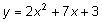 ?
x=-1/2x=-3
What are the zeros of the function 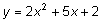 ?
x=-1/2x=-2
What are the solutions of the equation  ?
½ -⅓
What are the solutions of the equation  ?
-½ ⅓
What are the solutions of the equation  ?
-½ -⅓
 rewritten by completing the square?