
Key Sectors of Industrial Activity in Spain
Key Sectors of Industrial Activity
Industrial activities are grouped into sectors, according to the final destination of goods produced. We can distinguish:
- Industry-Based: These transform raw materials into semi-finished products, which, in turn, are used as feedstock for other industries. Examples include the steel and petrochemical industries.
- Equipment Industry: These produce goods, machinery, or tools that are used by other industries in their industrial processes.
- Consumer Goods Industry: These
Spanish Agriculture: CAP Impact, Rural Land Use & Modernization
The CAP and Its Implications
The Spanish agricultural policy has been significantly shaped by the Common Agricultural Policy (CAP). Its consequences include:
- A) Spain’s integration into the European common market, participating in its internal organization and engaging in extensive free trade among members. This includes Common Market Organizations for key products and a common tariff for imports from outside the EU. European free trade has opened a market of millions of consumers to Spanish products.
Chilean Forestry Regulations: Afforestation, Reforestation & Native Forest
Chilean Forestry Regulations
1. Article 1 This law seeks to regulate forestry in forest soils and fitness preferably in degraded soils and encourage afforestation, especially by small forest owners and those needed to prevent degradation, protection, and recovery of soils in the country.
2. Costs associated with forestry activities:
- a. Pruning and thinning costs
- b. Professional advice
- c. Acquisition of plants
- d. Work protection
- e. Establishment of plantation
- f. Preparation and fencing of the land
3.
4. A
Read More19th Century Industrialization: Impacts and Spread
Luddism
Luddism was a movement led by English craftsmen in the nineteenth century, which protested between 1811 and 1817 against the new machines that were destroying employment.
Chartism
Chartism was a UK parliamentary reform movement of 1837–48, the principles of which were set out in a manifesto called The People’s Charter. It called for universal suffrage for men, equal electoral districts, voting by secret ballot, abolition of property qualifications for MPs, and annual general elections.
Liberalism
Economic
Read MoreNatural and Man-Made Landscapes: Types and Impacts
Landscapes
A Landscape is Everything We Can See in an Area.
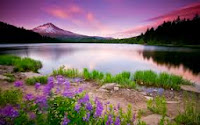
There Are Different Types of Landscape:
- Natural Landscapes: Natural features. They form very slowly over millions of years.

- Man-made Landscapes: Humans have changed the environment.
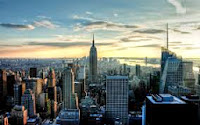
Types of Natural Landscapes: Inland (Away from the Sea) and Coastal (Near the Sea)
Landforms in Natural Inland Landscapes

- Mountains: Large inclines of rocky land that rise from the ground.

Parts of a Mountain: Summit, Foot, and Slope
- Summit: Top of a mountain.
Rock Deformation and the Rock Cycle: A Comprehensive Study
1. Deformation of Rocks
Geothermal Energy – Plate Tectonics – Stress – Deformation
1.1. Types of Stress
Stress is a force applied over an area. It can be classified into:
- Confining stress (stress is equal from all directions)
- Differential stress (stress is not equal from all directions)
- Compressional stress, produced by opposite, convergent forces
- Tensional stress, produced by opposite, divergent forces
- Shear stress, produced by opposite, parallel forces
As the stress is applied to a rock, it begins to deform
Read More