
Narrative and Dialogue in Literature
Narrative and Dialogue
Types of Characters
The protagonist is the main character in a narrative. The narrative focuses on their actions and experiences. The antagonist is the character who opposes the actions of the protagonist. Other characters in the narrative are considered secondary characters.
Characterization
Each character is a creation of the author, often based on real-life individuals. The writer develops the character throughout the story, revealing their personality and motivations. This
Read MoreGeneration of ’27: Spanish Literary Renaissance
The early 20th century witnessed a surge of artistic and literary movements known as the avant-garde, which sought to revolutionize creative expression. These movements fostered a climate of enthusiasm for poetry, particularly among the young poets who would later form the renowned Generation of ’27. The influential poetry of Juan Ramón Jiménez paved the way for this generation, creating a fertile ground for Spanish literature to flourish.
The Group of ’27
This group of poets, including Pedro Salinas,
Read More20th Century Spanish Theater: From Benavente to Lorca
Early 20th Century Theater
Bourgeois Comedy
This style, led by Jacinto Benavente, catered to the upper class with plays focused on their conflicts. Benavente’s skillful language, wit, and irony never challenged the social order. Notable works include those exploring vested interests in rural settings, such as La Malquerida.
Historical and Poetic Modernist Theater
This movement reacted against the critical view of Spanish history prevalent in the late 19th century. Authors like Eduardo Marquina recalled
Read MoreThe Generation of ’27 and Lorca’s Poetic Journey
The Generation of ’27
Overview
The Generation of ’27, a group of Spanish poets born around the turn of the 20th century, shared similar intellectual backgrounds and personal connections. Many met at the Student Residence, established by the Free Institution of Education. They participated in collective events, celebrations, and contributed to magazines like Litoral, including a tribute to Góngora, which gave the group its name. Initially influenced by Juan Ramón Jiménez and his verse and prose,
Read MoreSocial Injustice and Rebellion in Delibes’ Novel
Social Injustice and Rebellion
Thematic Clusters in Delibes’ Work
Delibes presents a stark portrayal of social injustice, where the disparity between masters and servants is blatant and accepted. This injustice is deeply rooted in the social structure, perpetuating a cycle of oppression and submission. The masters exhibit contempt for the servants, who are forced to endure abuse and limited opportunities. The novel explores the consequences of this injustice, culminating in a final act of rebellion.
Read MoreDon Quixote: A Literary Analysis & Guide
Don Quixote: A Literary Analysis
Purpose and Structure
Cervantes’s masterpiece, Don Quixote, was published in two parts (1605 and 1615). It aimed to critique the popular chivalric romances of the time.
Part 1: Inspired by chivalric tales, an aging Alonso Quixano decides to become a knight-errant, adopting the name Don Quixote. He chooses a “lady love” (Dulcinea) and a feeble horse (Rocinante), embarking on a series of misadventures. He enlists Sancho Panza as his squire, promising him governorship
Read MoreGeneration of ’27: Lorca and the Spanish Avant-Garde
Generation of ’27: The Spanish Avant-Garde
Federico García Lorca and his Contemporaries
The Generation of ’27 refers to a group of Spanish poets who emerged in the 1920s, coinciding with the rise of the avant-garde movement. The name originates from the year they participated in a tribute commemorating the death of Luis de Góngora. Prominent members include Jorge Guillén, Federico García Lorca, Dámaso Alonso, Luis Cernuda, and Rafael Alberti.
Despite their individual styles, these poets shared
Read MoreEarth’s Dynamic Processes: A Journey Through Plate Tectonics, Volcanoes, and Rock Formation
ERTH-2310E Exam 1 Cheat Sheet
Continental Drift and Plate Tectonics
The continents rise above the ocean because of isostasy. The continental plates are less dense than oceanic crust and thus sit higher relative to the oceanic plate.
3/5 Most abundant elements in the crust: Silicon, Iron, Oxygen, Aluminum, Calcium
The Geosphere and Biosphere are part of the Earth system.
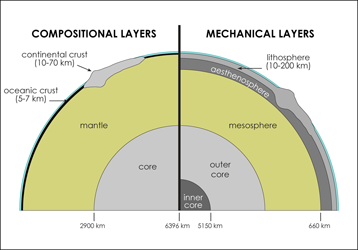
Earth’s Spheres:
- Geosphere (tectonics and volcanism)
- Atmosphere (air)
- Hydrosphere (water)
- Cryosphere (glaciers)
- Biosphere (life)
- Asthenosphere
Generation of ’98: Spanish Literature and Existentialism
Generation of ’98: A Literary and Historical Overview
The Generation of ’98 and Modernism emerged in Spain during the late 19th and early 20th centuries, sharing similar literary, historical, and social contexts. However, distinct differences set them apart.
Themes
The Disaster of 1898
The Spanish-American War of 1898 resulted in the loss of Spain’s colonial empire and international prestige. Writers of the Generation of ’98, also known as the G98, responded by idealizing Castilian landscapes, history,
Read MoreTraditional Spanish Literature
Traditional Literature
Oral Literature
Traditional literature in Romance languages was often transmitted orally. Verse, particularly when accompanied by music, was preferred due to its memorability. Poetry was initially oral and anonymous, with minstrels serving as essential transmitters. This poetry endures through tradition and because it was eventually transcribed.
Lyrical Manifestations
Jarchas
Jarchas are a manifestation of lyric poetry in Muslim Spain. These are stanzas of 5 or 6 lines that appear
Read More