
Chemical Bonds and Their Properties: A Comprehensive Study
**Chemical Bonds: Types and Characteristics**
**Main Types of Bonds**
- Ionic or Electrovalent Bond (transfer of electrons)
- Covalent Bond (sharing a pair of electrons between two atoms)
- Coordinate Covalent Bond (one of the two atoms provides the pair of electrons to share)
**Other Types of Bonds**
- Metallic Bond
- Hydrogen Bond
- Van der Waals Forces
**Ionic Substances**
Ionic substances result from electrostatic forces holding ions in a rigid, well-defined, three-dimensional structure. They are usually solid with
Read MorePhenomenalism: Perceptions and the External World
Phenomenalism
Phenomenalism is a philosophical theory according to which knowledge is possible for something different from our own perceptions. Hume believed that this philosophical position is the only reasonable one, but that it contradicts natural or common sense beliefs.
Classical empiricism defended a thesis that inevitably leads to phenomenalism: When we perceive, what we really perceive is not something external to our mind but our own feelings. This point of view was reached in different
Read MoreSpain’s Economy: Agriculture, Industry, Energy, and Tourism
Agriculture in Spain
The primary sector in Spain has traditionally been the most important part of the Spanish economy. However, since the mid-twentieth century, following the development of industry and services, it has declined in economic importance.
Main Crops
- Cereals: Barley, wheat, and maize are prominent. The communities that stand out for their production are Castilla y León, Castilla-La Mancha, and Aragon.
- Olives and Vines: The central area is composed of olive-producing provinces like Jaén
Front Crawl: Mastering Hand Entry and First Pull
Hand Entry into the Water in Front Crawl
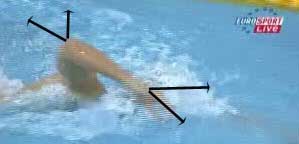 Initial position: Just finished the recovery phase of the stroke. The arm is flexed in front of the shoulder. The elbow acts as a pivot, positioned higher than the hand. The forearm is directed forward, towards the water. The hand is slightly relaxed, flexed, and facing down and back, a few inches from the water. 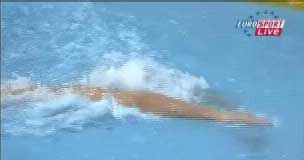 Final position: The arm is slightly bent in front of the shoulder. The elbow is directed upwards and has not yet entered the water. The hand is |
Kant’s Moral Philosophy: Categorical Imperative and Practical Reason
The Practical Reason: Moral Freedom and Autonomy
Kant’s Critique of Pure Reason demonstrates that scientific knowledge is impossible beyond the limits of experience. When reason exceeds those limits, it falls into contradictions. Nevertheless, the main concepts of metaphysics (God, soul, world), although exceeding the limits of sense experience, are an ideal of reason. Reason aspires to summarize knowledge.
Human reason is beset by issues that it cannot escape, as the author tells us, but that it
Read MoreAristotle’s Philosophy: From Experience to Universal Concepts
Aristotle
Stagira
Aristotle was a pupil of Plato in his Academy, so this influenced him enough in his conception of thought at first. However, Aristotle criticized very hard the extremely idealistic perception of his teacher, proposing a diametrically opposite perception.
Aristotle followed Plato in considering abstract knowledge more than anyone else, but he disagreed about the appropriate method to achieve it. Aristotle maintained that almost all knowledge is derived from experience. Knowledge is
Read MoreUrban Structure of Spanish Cities: Evolution and Transformation
The division of a town into areas with characteristic morphology and functions is a result of a long process of urbanization. The Spanish city today has a complex structure. In conventional cities, there are areas of old, corresponding to pre-industrial urbanization, the widening of the industrial era, and the current edge.
The Pre-Industrial City: The Old Town
The urbanized part of the city from its origin to the beginning of industrialization in the mid-nineteenth century has great cultural heritage
Read MoreDavid Hume’s Philosophy: Understanding Human Nature and Knowledge
Hume: An Analysis of Human Knowledge
Foundations in Human Nature
David Hume’s analysis of the principles of human knowledge has its roots in human nature. His study focuses on the logic and psychology of human nature, ultimately the instrument of man’s knowledge. Hume proposes to study the human mind, for it begins with an analysis of the contents of the mind. It is only perception. Perception is everything in our mind. All contents of consciousness come from sensory experience. Hume denies the existence
Read MoreSpain’s Transition to Democracy: 1975-1978
The death of Francisco Franco marked the beginning of a new historical stage: the transition to democracy, which aimed to prevent social division. To this end, the Crown garnered the support of anti-Franco sectors. However, the tension between supporters and opponents caused instability.
Following the dictator’s death, institutional mechanisms led to Prince Juan Carlos being named King of Spain on November 22, 1975.
The new monarchy was born protected (legitimate) by Franco himself, thus ensuring
Read MoreAmparo Proceedings: Key Principles and Legal Framework
Hermetic Jurisdictional Relations
- Coordination: Represents entities in the same category.
- Supraordination: One entity is above another, both being of the same level.
- Subordination: Coercible authority governed under a higher authority.
Types of Amparo
- Direct Amparo: Challenges final judgments or awards that end a trial.
- Indirect Amparo: Challenges any act that affects an individual.
1. Instance Rules or Principles of the Amparo Proceeding
- Article 107, Fraction I of the Constitution: Amparo will always proceed